
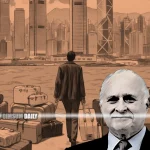
17th January 2025 – (Hong Kong) Hong Kong doesn’t need another expensive PR campaign; it needs authentic reinvention. The proposed US$50 million global promotional drive spearheaded by CLP Group chairman Michael Kadoorie, while well-intentioned, represents a fundamental misreading of Hong Kong’s current predicament and risks becoming yet another exercise in wasteful corporate vanity.
Let’s be brutally honest: splashing advertisements across The New York Times and The Wall Street Journal won’t magically restore Hong Kong’s tarnished international reputation. The city’s challenges run far deeper than mere image problems, and attempting to paper over them with glossy marketing campaigns borders on the delusional.
Hong Kong’s retail sector continues to struggle, with June 2024 sales hitting their lowest levels since 2011. Tourist arrivals remain 42% below 2018 levels, and the once-mighty financial sector is haemorrhaging jobs. Meanwhile, the Kai Tak Sports Park, while impressive, highlights Hong Kong’s tendency to prioritise grand gestures over meaningful reform.
Kadoorie’s initiative, which has already secured his personal pledge of US$5 million, represents the kind of top-down, tycoon-led thinking that has long characterised Hong Kong’s approach to problem-solving. However, in 2025, this playbook feels woefully outdated. The world has changed, and Hong Kong must change with it.
Rather than funding foreign media campaigns, the money would be far better spent within Hong Kong itself. The city desperately needs investment in local small businesses fighting for survival, support for cultural initiatives that showcase Hong Kong’s unique identity, development of programmes to retain and attract young talent, and meaningful improvements to the quality of life for ordinary Hong Kongers.
The emergence of the “concert economy” offers a perfect example of organic image rehabilitation. The city’s new Kai Tak Sports Park has naturally attracted international attention, not through expensive PR campaigns but by offering something of genuine value. With over 4.2 million spectators attending large-scale pop concerts in 2023-24, including 1.5 million tourists, Hong Kong is demonstrating how authentic revival trumps artificial promotion.
What’s particularly galling about Kadoorie’s proposal is its timing. As Hong Kong grapples with serious challenges – from housing affordability to youth unemployment – spending US$50 million on foreign advertising campaigns feels tone-deaf at best, and irresponsible at worst. The tycoons’ wait-and-see attitude toward Kadoorie’s proposal perhaps reflects a growing recognition that old solutions won’t fix new problems. Hong Kong’s path to renewed relevance lies not in telling its story differently, but in writing a new story altogether.
The core issue plaguing Hong Kong’s international reputation isn’t a lack of PR spending – it’s a crisis of authenticity and identity. While Kadoorie’s US$50 million might buy prime advertising space in Western media outlets, it cannot purchase credibility or genuine transformation.
Consider the Messi debacle at Hong Kong Stadium last year. Despite spending HK$16 million to secure the football star’s appearance, the event turned into a PR nightmare when he remained benched, only to play days later in Japan. No amount of advertising could offset the damage to Hong Kong’s reputation, especially after officials bizarrely attributed the incident to “black hands” and foreign interference.
The concert economy’s success offers a sharp contrast to such manufactured publicity stunts. When Hong Kong naturally leverages its strengths – like hosting the upcoming Coldplay concerts at the new Kai Tak Sports Park – positive international coverage follows organically. The venue’s 50,000-seat capacity and world-class facilities speak louder than any paid advertisement.
Moreover, Kadoorie’s approach seems oddly disconnected from current global media consumption patterns. In an age where social media influencers and user-generated content shape international perceptions, traditional newspaper advertisements feel antiquated. Young professionals worldwide aren’t forming opinions about Hong Kong based on Wall Street Journal ads; they’re watching social media videos of local street food vendors and reading Reddit threads about living costs.
The proposed PR campaign also ignores Hong Kong’s most pressing challenge: retaining its own talent. Between 2020 and 2024, over 200,000 residents left the city. These emigrants become Hong Kong’s de facto ambassadors abroad, and their narratives about why they left carry more weight than any glossy marketing campaign.
Instead of throwing millions at foreign media outlets, Hong Kong should invest in addressing the fundamental issues driving talent away: astronomical housing costs, diminishing career opportunities, and quality of life concerns. The average wait time for public housing now exceeds six years, while private property prices remain among the world’s highest despite recent corrections.
The irony is that Hong Kong already possesses what many cities spend millions trying to create: a unique identity at the crossroads of East and West. Rather than attempting to craft an artificial narrative through PR firms, the city should focus on preserving and evolving this authentic character.
Recent developments in the Greater Bay Area integration offer real opportunities for organic image enhancement. The success of the Hong Kong Palace Museum, drawing over 900,000 visitors in its first year, demonstrates how cultural initiatives can naturally boost the city’s international profile without resorting to expensive advertising campaigns.
Hong Kong needs to recognise that its future lies not in trying to recapture its past glory through expensive PR campaigns, but in authentically reinventing itself for a new era. The US$50 million would be better spent on initiatives that make tangible differences to residents’ lives – from expanding affordable housing to supporting local arts and culture.
The wait-and-see approach adopted by other tycoons toward Kadoorie’s proposal suggests growing recognition that Hong Kong’s challenges require more than superficial solutions. In an era where authenticity is currency, attempting to buy credibility through advertising is not just wasteful – it’s counterproductive.
The post Hong Kong recovery needs more than Kadoorie’s PR millions appeared first on Dimsum Daily.






 English (US) ·